Arlington, Texas · Tarrant County

Backyard Birds
of Arlington

Your guide to North Texas birdwatching

Arlington sits along key migratory flyways with a remarkable mix of bottomland forests, wetlands, and prairies — making it one of the best cities in North Texas for backyard birding year-round.

97
Species in one Arlington yard
664
Bird species in Texas
1,300
Acres at River Legacy Park
Explore

About Arlington

A city that birds love to call home

Arlington's position along the West Fork of the Trinity River creates a remarkable range of bird habitats — bottomland forests, riparian wetlands, open prairies, and urban green spaces all woven together within city limits.

Texas Master Naturalist Charley Amos documented 97 species from his North Arlington yard alone. With a birdbath, native plants, and the right feeders, any Arlington backyard can become a genuine sanctuary. A well-built cedar birdhouse makes a real difference — learn which species need what, then have one built to spec.

Birds you can see any day of the year

These 12 species make Arlington their permanent home. Learn to identify them and you'll always have something to watch, no matter the season.
Northern Cardinal
Year-Round
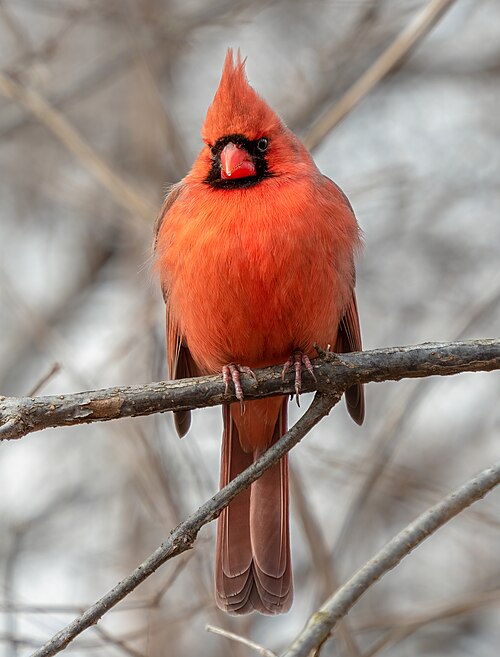
Northern Cardinal
Cardinalis cardinalis
Arlington's most recognizable bird. Males are brilliant red with a crest and black mask; females are warm brown with red accents. Appears in about 52% of local bird checklists year-round.
Feeder visitorSunflower seedsDense shrubs
Photo: Wikimedia Commons · CC BY 2.0
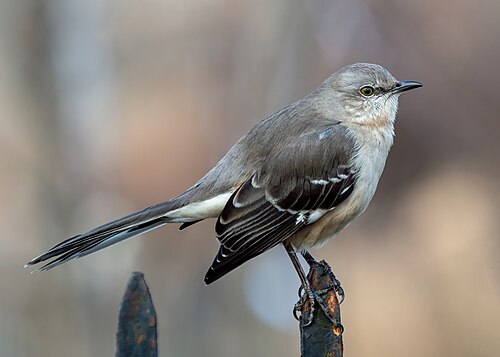
Northern Mockingbird
Year-Round
Northern Mockingbird
Mimus polyglottos
Texas's state bird and Arlington's loudest resident. Mimics dozens of other bird songs, often continuing through the night. Gray with white wing patches visible in flight.
State bird of TexasVocal mimicFruiting plants
Photo: Wikimedia Commons · CC BY-SA 3.0
Carolina Wren
Year-Round
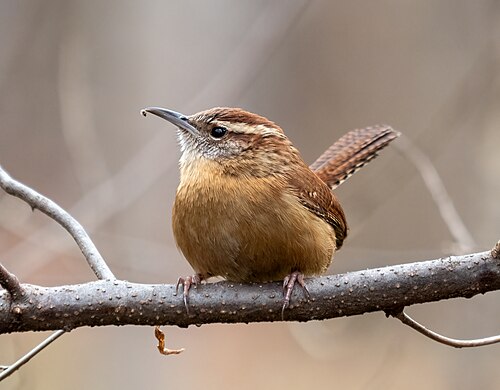
Carolina Wren
Thryothorus ludovicianus
Small but mighty — reddish-brown body, bold white eyebrow stripe, and a voice far louder than its size suggests. Secretive by nature; you'll hear "teakettle-teakettle!" before you see it.
Cavity nesterMealwormsDense brush
Photo: Wikimedia Commons · CC BY-SA 2.0
Blue Jay
Year-Round
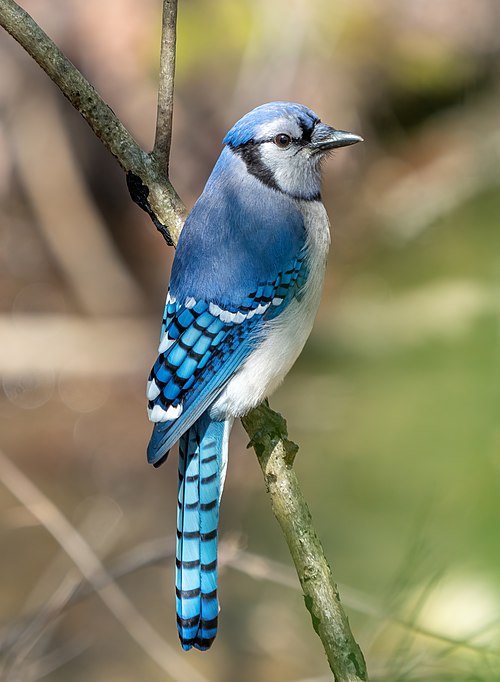
Blue Jay
Cyanocitta cristata
Bold, intelligent, and unmistakable with vivid blue, white, and black plumage. Active and vocal year-round — especially in late summer when family groups move through Arlington neighborhoods together.
Feeder visitorPeanutsOak trees
Photo: Wikimedia Commons · CC BY 2.0
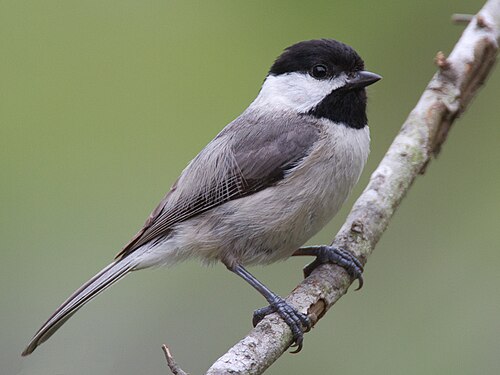
Carolina Chickadee
Year-Round
Carolina Chickadee
Poecile carolinensis
Small, acrobatic, and fearless. Black cap, black bib, white cheeks, soft gray sides. One of the friendliest feeder birds in Arlington — will often visit within minutes of a new feeder going up.
Cavity nesterSunflower seedsWooded edges
Photo: Dan Pancamo · CC BY-SA 2.0
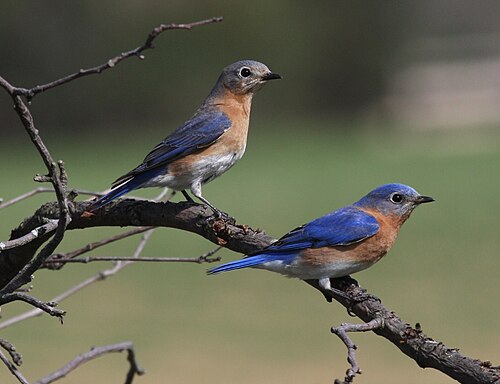
Eastern Bluebird
Year-Round
Eastern Bluebird
Sialia sialis
One of North America's most beloved birds. Males vivid blue above with a warm rusty-orange breast. Attracted to open, grassy areas — a properly built nest box with a 1.5-inch entrance hole is the surest way to bring them in.
Cavity nesterMealwormsOpen fields
Photo: Wikimedia Commons · CC BY-SA 2.0
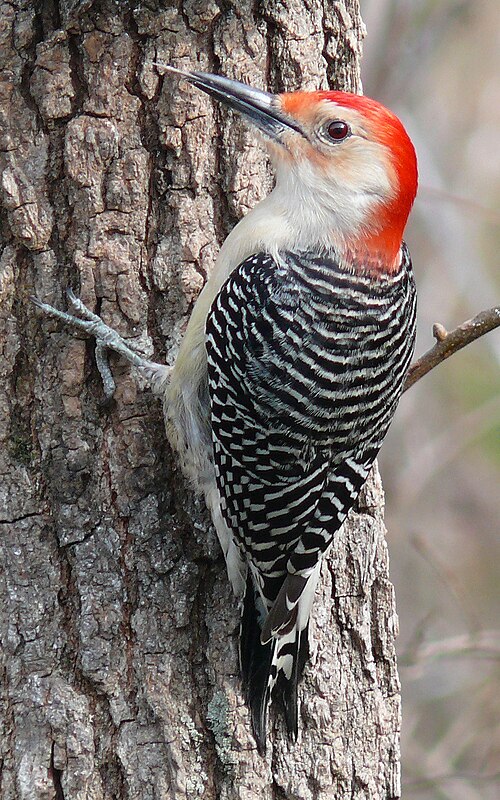
Red-bellied Woodpecker
Year-Round
Red-bellied Woodpecker
Melanerpes carolinus
Striking red cap and black-and-white ladder-patterned back. The reddish belly patch is subtle — you'll notice the loud, rolling call first. A reliable year-round Arlington visitor at suet feeders.
Suet feederDead treesCavity nester
Photo: Wikimedia Commons · CC BY-SA 2.0
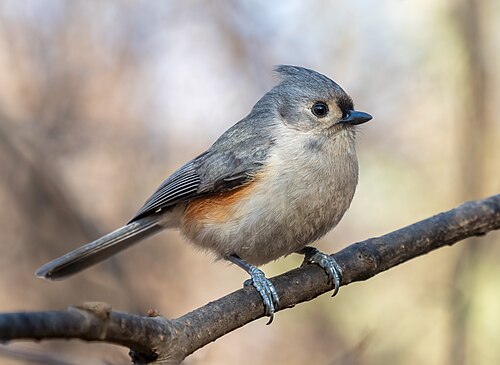
Tufted Titmouse
Year-Round
Tufted Titmouse
Baeolophus bicolor
Perky gray bird with a pointed crest, rust-colored flanks, and oversized dark eyes. Bold and inquisitive — one of the most entertaining backyard visitors in Arlington, especially at sunflower feeders.
Sunflower seedsPeanutsCavity nester
Photo: Wikimedia Commons · CC BY 2.0
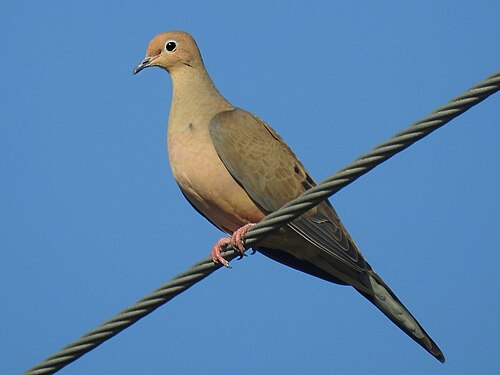
Mourning Dove
Year-Round
Mourning Dove
Zenaida macroura
Soft grayish-brown with a long pointed tail and gentle mournful cooing. One of the most abundant birds in Arlington — usually foraging quietly on the ground beneath feeders or on power lines.
Ground feederMilletVery common
Photo: Wikimedia Commons · CC BY-SA 3.0
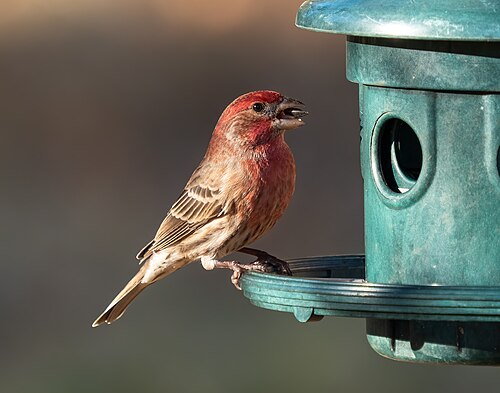
House Finch
Year-Round
House Finch
Haemorhous mexicanus
Males have a rosy-red head, breast, and rump — intensity varies by individual. Highly social, traveling in cheerful flocks. Enthusiastic year-round feeder visitors throughout Arlington.
Tube feederNyjer seedFlocks
Photo: Wikimedia Commons · CC BY 2.0
Downy Woodpecker
Year-Round
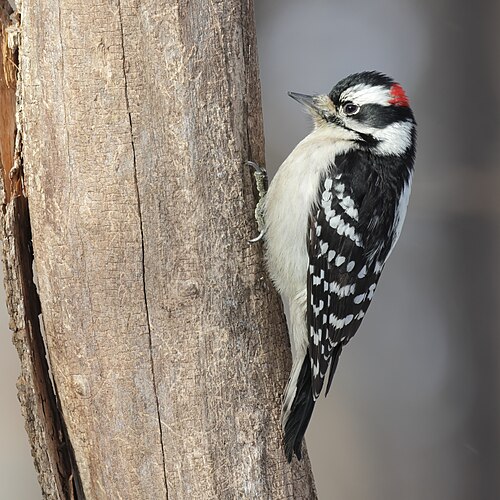
Downy Woodpecker
Dryobates pubescens
The smallest woodpecker in North America. Black and white with a small red patch on males. A reliable visitor at Arlington suet feeders — look for it hitching along branches and fence posts.
Suet feederDead woodBark prober
Photo: Wikimedia Commons · CC BY-SA 3.0
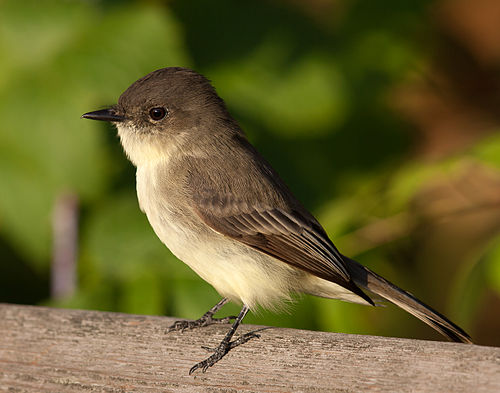
Eastern Phoebe
Year-Round
Eastern Phoebe
Sayornis phoebe
A compact flycatcher with a dark head and the distinctive habit of bobbing its tail. Common near Arlington waterways and wooded edges, sallying out from perches to snatch insects mid-air.
Insect eaterTail waggerNear water
Photo: Wikimedia Commons · CC BY 2.0

What to watch for, season by season

Arlington's location along the Central Flyway means the cast of birds changes dramatically through the year — spring and fall bring waves of migrants you won't see any other time.

🌿
Spring
  • Painted Bunting
  • Ruby-throated Hummingbird
  • Black-chinned Hummingbird
  • Barn Swallow
  • Scissor-tailed Flycatcher
  • Yellow Warbler
  • Baltimore Oriole
  • Indigo Bunting
☀️
Summer
  • Painted Bunting (peak)
  • Western Kingbird
  • Great Blue Heron
  • Yellow-crowned Night-Heron
  • Green Heron
  • Chuck-will's-widow
  • Brown-headed Cowbird
  • Common Nighthawk
🍂
Fall
  • Cedar Waxwing
  • American Goldfinch
  • Ruby-crowned Kinglet
  • Orange-crowned Warbler
  • Yellow-rumped Warbler
  • Dark-eyed Junco
  • Savannah Sparrow
  • Lincoln's Sparrow
❄️
Winter
  • Yellow-rumped Warbler
  • Ruby-crowned Kinglet
  • American Robin (flocks)
  • Chipping Sparrow
  • Fox Sparrow
  • White-throated Sparrow
  • American Goldfinch
  • Brown Creeper

Where to watch birds in Arlington

From a 1,300-acre river park to quiet neighborhood preserves, Arlington offers excellent birding spots for observers of every level.

01
River Legacy Park
Arlington's crown jewel for birding — 1,300 acres along the West Fork of the Trinity River. Eight miles of paved trails through bottomland forest, wetlands, and open prairie. Among the finest birding in all of Tarrant County. Open daily 5am–10pm.
Great Blue HeronBelted KingfisherSnowy EgretNight-HeronMallard
02
Southwest Nature Preserve
A 58-acre preserve with quiet woodlands and a pond. More intimate than River Legacy, with accessible bird blinds and slower trails suited to patient observation. Excellent for Wood Ducks and woodland species.
Wood DuckCarolina WrenTufted TitmouseBarred Owl
03
Sheri Capehart Preserve
A hidden gem in south Arlington. Wooded creek corridors and open grasslands attract both resident and migratory species. Particularly good for sparrows, warblers during migration, and raptors year-round.
Red-tailed HawkPainted BuntingSparrowsWarblers
04
Randol Mill Park
A neighborhood park with creek access along Village Creek in northeast Arlington. The riparian corridor draws wading birds and migrating warblers, while the open park edges attract field species year-round. A quieter alternative to River Legacy with reliable songbird activity.
Yellow WarblerEastern KingbirdGreat EgretIndigo Bunting
05
Lake Arlington
Arlington's reservoir offers open-water birding for species that don't visit wooded parks. Scan the water for diving ducks, grebes, and cormorants in winter. The shoreline and surrounding coves draw herons, egrets, and shorebirds during migration and summer.
Double-crested CormorantRing-billed GullLesser ScaupPied-billed Grebe
06
Your Own Backyard
Charley Amos documented 97 species from his North Arlington yard alone. Water, native plants, and the right birdhouses — including species-specific nest boxes — can make any Arlington yard a genuine sanctuary.
Northern CardinalCarolina WrenEastern BluebirdHummingbird

Make your Arlington yard
a bird sanctuary

Water, native plants, shelter, and food — get these right and birds will find you on their own. Here's what works in North Texas.

01
Water first, always
A clean birdbath is the single most effective thing you can add to any Arlington yard. Keep it fresh and clean — birds are remarkably selective. A dripper or mister makes it irresistible, especially in Texas summer heat.
02
Plant native species
Native oaks, possumhaw hollies, beautyberries, and native grasses produce the berries, seeds, and insects that North Texas birds evolved to eat. Exotic ornamentals rarely offer the same ecological value, no matter how pretty.
03
Right seed, right bird
Black oil sunflower seeds attract Cardinals, Chickadees, and Finches. Nyjer brings Goldfinches. Mealworms are irresistible to Bluebirds and Wrens. Suet draws Woodpeckers from fall through spring.
04
Put up the right birdhouse
Cavity nesters — Bluebirds, Wrens, Chickadees, Titmice, Woodpeckers — won't nest without a box. Hole size and interior dimensions are critical; a 1.5-inch hole for Bluebirds, 1.25-inch for Wrens. Cedar construction holds up in Texas heat. Mizell Woodworking builds them to spec.
05
Go chemical-free
Pesticides eliminate the insects that birds depend on for food — especially for feeding nestlings. Insectivorous species like wrens, bluebirds, and phoebes can't thrive in yards where the insect population has been suppressed.
06
Multiple feeders, multiple heights
Tube feeders for finches high up. Platform feeders for Cardinals and Jays mid-level. Ground trays for Sparrows and Doves below. Suet cage on a tree trunk for Woodpeckers. Different species feed at different levels.

Ready to attract more birds
to your Arlington yard?

Rick and Cindy Mizell build custom cedar birdhouses sized for the species that actually live in Arlington — Eastern Bluebirds, Carolina Wrens, Chickadees, Titmice, and more. Every house is built by hand, to spec, with free local delivery.

Western red cedar Species-specific sizing Free delivery in Arlington Custom orders welcome
See Birdhouse Styles Or call Rick & Cindy: 817-555-5555

Questions about Arlington birds

What birds live in Arlington, Texas year-round?

Arlington's permanent residents include Northern Cardinal, Northern Mockingbird (Texas state bird), Carolina Wren, Blue Jay, Carolina Chickadee, Eastern Bluebird, Red-bellied Woodpecker, Tufted Titmouse, Mourning Dove, House Finch, Downy Woodpecker, and Eastern Phoebe — plus many more. Texas Master Naturalist Charley Amos documented 97 total species from his North Arlington yard.

What is the most common bird in Arlington, Texas?

The Northern Mockingbird — Texas's state bird — is among the most conspicuous. The Northern Cardinal is probably the most beloved, appearing in about 52% of local bird checklists year-round. The Mourning Dove is likely the most numerous of all.

Where is the best birdwatching in Arlington, TX?

River Legacy Park is the top spot — 1,300 acres along the Trinity River with bottomland forest, wetlands, and 8 miles of trails. Southwest Nature Preserve and Sheri Capehart Nature Preserve are also excellent. And with the right setup, your own backyard can rival any of them for sheer variety.

How do I attract Eastern Bluebirds to my Arlington yard?

Bluebirds are cavity nesters that readily use a properly built nest box. The entrance hole must be exactly 1.5 inches, the floor 5×5 inches, and the box mounted 4–6 feet high in an open grassy area. Offer mealworms in a shallow dish — bluebirds will reliably return once they learn the spot. Mizell Woodworking builds bluebird boxes to exact spec.

Do hummingbirds visit Arlington, Texas?

Yes — Ruby-throated and Black-chinned Hummingbirds both pass through Arlington during spring and fall migration, with some Black-chinned individuals staying through summer. Hang a clean nectar feeder (1 part sugar to 4 parts water, no red dye) by late March and you'll likely have visitors through October.

What birds migrate through Arlington in spring?

Spring migration brings Painted Buntings, Baltimore Orioles, Barn Swallows, Ruby-throated and Black-chinned Hummingbirds, Scissor-tailed Flycatchers, Yellow Warblers, and Indigo Buntings. Arlington's position along the Central Flyway makes it a productive stopover location from March through May.

What should I feed birds in my Arlington yard?

Black oil sunflower seeds attract the widest variety. Nyjer (thistle) brings Goldfinches. Mealworms are irresistible to Bluebirds and Wrens. Suet cakes draw Woodpeckers in cooler months. A clean birdbath is arguably the single most effective addition — water attracts species that never visit feeders.

What type of birdhouse should I put up in North Texas?

Cedar is the best material for Texas — it resists rot and insects naturally and stays cooler inside during summer heat. For hole sizes: 1.5 inches for Eastern Bluebirds, 1.25 inches for Carolina Wrens and Chickadees, 1.25 inches in a deeper box for Downy Woodpeckers. Mount the box 4–6 feet high, facing away from afternoon sun. Call Mizell Woodworking to have one built to spec.